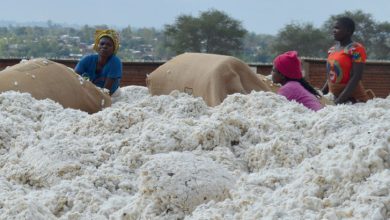
Once upon a time a crop that supported thousands of smallholder farmers in Malawi, cotton has declined over the years and ginneries now stand idle due to production.
However, industry players believe the crop still holds immense potential. They urge farmers, policymakers and investors to revive cotton production for improved rural livelihoods and Malawi’s textile industry.

For decades, the cash crop has supported rural livelihoods, smallholder farmers’ incomes and national economic growth.
When processed into thread, fabric and clothing, it powers industrialisation—creating jobs, builds industries and strengthens forex earnings.
With renewed efforts, cotton could open a golden opportunity for farmers to diversify their earnings.
State produce trader, the Agricultural Development and Marketing Corporation (Admarc) owns three ginneries: Ngabu in Chikwawa, Ngala in Karonga and Balaka town.
But due to low production, only Ngabu ginnery is operational.
Admarc chief executive officer Ben Botolo says cotton has the potential to transform Malawi’s economy if farmers receive the necessary support.
“Cotton is also important as a crop that offers opportunities for value addition. Raw cotton can be processed into thread, fabric, clothing and many other textile products,” he states.
Admarc planned to buy 10 000 metric tonnes during the previous season, but secured just over a tenth.
The unmet demand underscores the need for more production.
Botolo says: “When cotton is processed locally instead of being exported raw, it creates more jobs, generates more income and contributes immensely to the national economy.
Apart from purchasing cotton from farmers, Admarc plans to cultivate its own to meet customer demand.
The State-owned company works with the Cotton Council of Malawi to provide farmers with recommended seed and chemicals for bumper yields.
The vision is clear: more cotton in the fields and more jobs in the factories.
Cotton Council of Malawi executive director Cosmas Luwanda says access to the right seed and training guarantees farmers better yields.
“We currently have more than 10 varieties of improved cotton seed,” he says. “These varieties come with specific technical recommendations. When properly managed, they can deliver higher yields. Training programmes help farmers understand how to cultivate and manage these varieties effectively.”
According to Luwanda, the council targets 50 000 metric tonnes (MT)in the next growing season.
The bold ambition requires mobilising thousands of farmers and distributing 125MT of seed.
“Value addition is only possible when production levels are adequate to sustain industrial operations. We need to start with the first step: Producing the required quantity. Once we achieve that, the rest of the value chain will follow,” he narrates.
India, a global leader in cotton production, supports Malawi’s cotton industry.
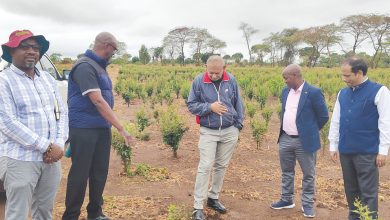
During a meeting at Ngabu Ginnery, Indian High Commissioner Amararam Gujar pledged his government’s support for Malawian farmers through provision of quality cotton seed to improve Malawi’s cotton sector.
He reckons public–private partnerships would make the cotton industry more sustainable and competitive.
Collaboration can help mobilise the resources and expertise needed to strengthen the sector, said the Indian envoy.
“It is important to bring private players are brought into the picture and set up the whole cotton value chain,” he said.
Tikondane Trade Import and Export Association of Malawi president Tembo Khisimisi says farmers are eager to make cotton great again, but they require reliable access to quality seed.
“We knocked on the Ambassador’s door to get support in terms of cotton seed. We are optimistic that India will consider supporting us with quality seed to improving cotton farming,” he states.
Cotton is Malawi’s fourth-largest foreign exchange earner after tobacco, tea, and sugar.
Its revival could boost the country’s trade balance and textile industry instead of exporting raw cotton.
From clothing factories employing thousands of workers to export markets demanding high-quality textiles, cotton could become the backbone of the country’s industrial revolution, as it has been in other countries.
Botolo encourages farmers to embrace cotton not just as a crop but as a pathway to prosperity.
Increasing agricultural productivity and commercialisation is a major pillar of the vision to transform Malawi into an inclusive, industrialised upper middle-income economy by 2063.
This calls for greater investment in creating favourable conditions for investment in quality seed, training, trade and infrastructure as exemplified by Admarc’s partnership with the cotton council and Government of India.
For Malawians, cotton is more than a crop, but a symbol of resilience, an opportunity for economic prosperity and the springboard for industrial revolution.